Curriculum – Geography

Curriculum – Geography

Geography

The Curriculum

Curriculum Intent

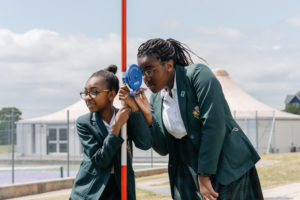
Geography at Southend High School for Girls inspires students to be curious and fascinated with the world.  It enables students to understand interactions between physical and human environments to develop knowledge on place, people and resources, both nationally and globally.  The subject provides a balance of human and physical geography topics throughout each Key Stage to embed and utilise the core concepts of the National Curriculum.  Through a spiral curriculum, students are led to both consolidate and progress their knowledge of the world to become well-rounded learners.  Through scholarly endeavour, students utilise and practise a variety of skills including numeracy, literacy, analytical and communication skills.  Students are active participants in using an inquisitive approach both in the field and classroom to collate, analyse and present complex data to better understand the world we live in.  Students regularly develop and practise geographical skills to interpret maps, diagrams, photographs and GIS.  Students are exposed to familiar and unfamiliar environments through fieldwork in the local and surrounding area. Geography should enable students to be independent thinkers who question attitudes and alternative futures for our Earth.

What does it feel like to be a student in the Geography Department?
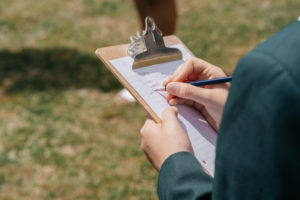
In years 7, 8 and 9 students are kept intrigued and challenged in developing an understanding of how physical and human environments interact, within familiar and unfamiliar places within the UK and beyond.  They should develop knowledge of places, people, and interactions through named examples.  Students will thrive in developing their communication skills through literacy and oracy, working on describe and explain as well as building confidence in presentation skills.  They will establish research skills to independently investigate ecosystem interactions, cities and more.  Students will build inquiry skills to interpret maps, diagrams and photographs.

By the end of year 11, after five years of studying Geography, students are confident in their knowledge of how physical and human environments interact.  They are more informed of UK geography including the role of people and physical landscape features.  Students have applied factual knowledge to local and global examples both in theory and through fieldwork.  Students have developed their communication skills through literacy and oracy, working on justification and evaluation as well as being much more confident in their presentation skills.  Students can interrogate a variety of media resources including photographs, maps, diagrams and GIS.

By the end of year 13, after seven years of studying Geography, students have embedded their knowledge of how physical and human environments interact through comprehensive and broad factual knowledge.  They have developed independent thinking and natural curiosity about people, place, and resources, both locally, nationally and globally.  Their inquisitive approach to their studies has them questioning players attitudes and alternative futures for their planet whilst thinking about sustainability and their role on the planet.  Students have proven themselves to be well-rounded learners rooted in well-established skills in literacy, oracy, numeracy, analysing and evaluative in a variety of medium, for example, written work, photographs, diagrams and GIS.

Please click on the button below to download the assessment policy for Geography.

Journey

Geography Curriculum

Knowing more, remembering more, and achieving more in Geography.

At Southend High School for Girls we teach a curriculum that is ambitious and takes students on a learning journey beyond the National Curriculum for Geography. The SHSG Geography curriculum is what we believe will expose and challenge students to a cultural capital in Geography that is the best that has been thought and said in this subject.

The Geography curriculum is planned and delivered using the intellectual framework of the classical education model, the Trivium:

  • Grammar (Knowledge and skills) knowledge, learning by heart, subject terminology, cultural capital.
  • Dialectic (Enquiry and exploration) debate, question, challenge, analyse, evaluate.
  • Rhetoric (Communication) essays, speeches, performances, presentations.

Year 7 – 9

Pre-requisite or helpful knowledge from Year 6 Geography ready to study in Year 7 if applicable

No pre-requisites required but it would be helpful to know the continents and oceans of the world.

Adjustments from the Pandemic for years 7 – 9 if applicable?

  • A spiralled curriculum which re-visits key geographical skills throughout KS3 to allow plentiful practice.

The topics below have been chosen as they reflect the ambitions of the National Curriculum, and as a Grammar school, also challenge students beyond the National Curriculum. They have been carefully sequenced in this order to build a student’s learning journey to achieve the aims of our Geography intent. Along the way students are assessed and topics will be revisited in assessments to keep each stage of this learning journey alive.

Year 7

Term 1

Topic 1

  • Population and Settlements

Assessment

  • Map skills
  • Graph skills
  • Discussion
  • Extended writing using chains of reasoning

Topic 2

  • Map Detectives

Assessment

  • In class puzzles and tasks
  • End of unit test

Term 2

Topic 3

  • Food for Thought: Food geography

Assessment

  • Map skills
  • Graph skills
  • Presentations
  • Extended writing using decision-making skills and chains of reasoning.

Term 3

Topic 4

  • Wild Weather

Assessment

  • Climate graph skills
  • Map skills
  • Creative piece on types of rainfall comic strip
  • End of Year Examination

Topic 5

  • Biogeography

Assessment

  • Fieldwork
  • Research skills
  • Map skills
  • Full report

Year 8

Term 1

Topic 1

  • Geoscience

Assessment

  • Map skills
  • Creative writing
  • Extending writing using chains of reasoning
  • Presentations

Topic 2

  • Globalisation

Assessment

  • Map skills
  • Graph skills
  • Key terms quiz
  • Extended writing using decision-making and chains of reasoning


Term 2

Topic 3

  • Water Shapes our World

Assessment

  • Key terms quiz
  • Mid-unit test
  • Chains of reasoning

Term 3

Topic 4

  • Let’s Talk About Africa

Assessment

  • Map skills
  • Graph skills
  • Extended writing using decision-making and chains of reasoning
  • Research skills
  • End of Year Examination

Year 9

Term 1

Topic 1

  • Environmental Challenges: Ecosystems

Assessment

  • Skills check on atlas work.
  • Skills check on climate graphs.
  • Creative poster on TRF
  • Decision-making practise exercise on damaging the tropical rainforest.

Topic 2

  • Green Crime

Assessment

  • Discussion and debate
  • Creative poster on green crime example
  • Extended writing using chains of reasoning

Term 2

Topic 3

  • World Cities: Mumain

Assessment

  • Skills check on atlas work and data interpretation.
  • Extended writing on decision-making and chains of reasoning

Term 3

Topic 4

  • Climate Change

Assessment

  • Skills check on climate graphs.
  • Research skills
  • Discussion and debate
  • End of Year Examination

Achieving outstanding outcomes in Geography – knowing and remembering even more that what is expected of a grammar school KS3 curriculum. 

In KS3 we assess student progress and attainment against the degree to which students have secured the key knowledge, skills and understanding that have been defined as being essential within each subject for a given year. (see above) 

When reporting student progress this will be determined by the quality of work being produced at that point within each subject given the context of this selective grammar school.  Progress will be reported according to the following standards: 

  • Working beyond expected year standard. 
  • Working at expected year  
  • Working towards expected year standard. 

To go beyond what is expected of a Geography student in KS3 students should students should read widely, watch the news regularly (for example, BBC News) engage in recommended research, and learn key language and subject specific terminology. To do this, students should do the following: 

  • Highlight all required technical terminology in exercise books. Students are encouraged to create a glossary of key terms during revision. 
  • Learn the key concepts of the decision-making process and justification of a choice. 
  • Learn what is meant by ‘skills’ in Geography including ‘describe’ ‘explain’ and ‘justify’ 

Recommended reading in Geography for Lower School (Years 7 – 9)

Useful websites, TED Talks and research for Lower School (Years 7 – 9)

To help practise key skills and consolidate knowledge:

Research on upcoming studies, events and competitions:

Geography-specific language to master in Lower School (Years 7 – 9)

  • All required technical terminology can be found highlighted in exercise books. Students are encouraged to create a glossary of key terms during revision.
  • Key concepts of the decision-making process and justification of a choice.
  • What is meant by ‘skills’ in Geography including ‘describe’ ‘explain’ and ‘justify’.

Knowing more, remembering more, and achieving more in Geography.

At Southend High School for Girls we teach a curriculum that is ambitious and takes students on a learning journey beyond the GCSE specification for Geography. The SHSG Geography curriculum is what we believe will expose and challenge students to a cultural capital in Geography that is the best that has been thought and said in this subject.

The Geography curriculum is planned and delivered using the intellectual framework of the classical education model, the Trivium:

  • Grammar (Knowledge and skills) knowledge, learning by heart, subject terminology, cultural capital.
  • Dialectic (Enquiry and exploration) debate, question, challenge, analyse, evaluate.
  • Rhetoric (Communication) essays, speeches, performances, presentations.

Pre-requisite or helpful knowledge from Key Stage 3 Geography ready to study in Year 10 if applicable

  • Sound map skills.
  • Graph skills to include bar charts, line graphs, compound graphs and pie charts.

The topics below have been chosen as they reflect the ambitions of the Eduqas-B, and as a Grammar school, also challenge students beyond the specification. They have been carefully sequenced in this order to build a student’s learning journey to achieve the aims of our Geography intent. Along the way students are assessed and topics will be revisited in assessments to keep each stage of this learning journey alive.

Year 10

Term 1

Topic 1

  • Coastal Processes and management

Assessment

  • Graphical skills checks.
  • Practise exam-style questions including resource-based questions.
  • Fieldwork techniques for investigating coastal landscapes.
  • PPE


Topic 2

  • Rural & Urban UK Processes & Change

Assessment

  • Graphical skills checks.
  • Practise exam-style questions including resource-based questions.
  • Fieldwork techniques for investigating rural/urban landscapes.
  • Presentation skills (research, create and present findings)
  • End of unit assessment


Term 2

Topic 2 (continued)

  • Rural & Urban UK Processes & Change

Assessment

  • Graphical skills checks.
  • Practise exam-style questions including resource-based questions.
  • Fieldwork techniques for investigating rural/urban landscapes.
  • Presentation skills (research, create and present findings)
  • PPE


Topic 3:

  • River Processes, Flooding & Management

Assessment

  • Graphical skills checks.
  • Practise exam-style questions including resource-based questions.
  • PPE

Term 3

Topic 4

  • Extreme Weather, Climate & Desertification

Assessment

  • Graphical skills checks.
  • Practise exam-style questions.
  • Research skills for case study content.
  • End of unit assessment

Year 11

Term 1

Topic 1

  • Ecosystems: Hot semi-arid grassland & a local ecosystem example

Assessment

  • Practise exam-style questions including resource-based questions.
  • Fieldwork techniques for local ecosystem investigation.
  • End of unit assessment.

Topic 2

  • Fieldwork

Assessment

  • Practise exam-style questions including resource-based questions
  • PPE

Term 2

Topic 3

  • Water Management

Assessment

  • Graphical skills checks.
  • Practise exam-style questions including resource-based questions.
  • End of unit assessment
  • PPE

Topic 4

  • Uneven Patterns of Development

Assessment

  • Graphical skills checks.
  • Practise exam-style questions including resource-based questions.
  • PPE

Term 3

  • Review, recap and revise Ecosystems, Climate Change & Global Cities

Assessment

  • Practise exam-style questions including resource-based questions.

In-class style PPE

Achieving outstanding outcomes in Geography– knowing and remembering even more that what is expected of a grammar school KS4 curriculum. 

In KS4 we assess student against the core content and assessment objectives as outlined by the relevant GCSE examination board specification.  For Geography this is Eduqas-B.  To go beyond what is expected of a Geography student at GCSE and achieve outstanding outcomes in Geography students should read widely, watch the news regularly (for example, BBC News) engage in recommended research, and learn key language and subject specific terminology. To do this, students should do the following: 

  • Highlight all required technical terminology in exercise books. Students are encouraged to create a glossary of key terms during revision. 
  • Learn the key concepts of the decision-making process and justification of a choice. 
  • Learn what is meant by ‘skills’ in Geography including ‘describe’ ‘explain’ and ‘justify’ 

Recommended reading in Geography for Middle School (Years 10-11)

Useful websites, TED Talks and research for Lower School (Years 10 – 11)

To help practise key skills and consolidate knowledge:

Research on upcoming studies, events and competitions:

Geography-specific language to master in Middle School (Years 10 – 11)

  • All required technical terminology can be found highlighted in exercise books. Students are encouraged to create a glossary of key terms during revision.
  • Key concepts of the decision-making process and justification of a choice.
  • What is meant by ‘skills’ in Geography including ‘describe’ and ‘explain’

Knowing more, remembering more, and achieving more in Geography.

At Southend High School for Girls we teach a curriculum that is ambitious and takes students on a learning journey beyond the A-Level specification for Geography. The SHSG Geography curriculum is what we believe will expose and challenge students to a cultural capital in Geography that is the best that has been thought and said in this subject.

The Geography curriculum is planned and delivered using the intellectual framework of the classical education model, the Trivium:

  • Grammar (Knowledge and skills) knowledge, learning by heart, subject terminology, cultural capital.
  • Dialectic (Enquiry and exploration) debate, question, challenge, analyse, evaluate.
  • Rhetoric (Communication) essays, speeches, performances, presentations.

Pre-requisite or helpful knowledge from Key Stage 4 Geography ready to study in Year 13 if applicable

  • GCSE level knowledge of Coasts units.
  • Sound map and graphical skills.


Adjustments from the Pandemic for years 12-13 if applicable?

A spiralled curriculum which re-visits key geographical skills and concepts from KS4.

The topics below have been chosen as they reflect the ambitions of the Edexcel specification, and as a Grammar school, also challenge students beyond the specification. They have been carefully sequenced in this order to build a student’s learning journey to achieve the aims of our Geography intent. Along the way students are assessed and topics will be revisited in assessments to keep each stage of this learning journey alive.

Year 12

Term 1

Topic 1 (Physical)

  • Coastal Landscapes & Change

Assessment

  • Graphical skills checks.
  • Practise exam-style questions including resource-based questions.
  • Research skills for case study content.
  • Presentation (research, write up and present)
  • Fieldwork techniques
  • End of unit assessment.

Topic 2 (Human)

  • Globalisation

Assessment

  • Practise exam-style questions.
  • Research skills.
  • End of unit assessment.

Topic 3 (Human)

  • Shaping Places: Diverse Places

Assessment

  • Practise exam-style questions.
  • Research skills.

Field trip: Newham, London


Term 2

Topic 1 (Physical continued)

  • Coastal Landscapes & Change

Assessment

  • Graphical skills checks.
  • Practise exam-style questions.
  • Research skills for case study content.
  • Presentation (research, write up and present)
  • Fieldwork techniques.
  • End of unit assessment

Topic 2 (Human Continued)

  • Globalisation

Assessment

  • Practise exam-style questions.
  • Research skills.
  • End of unit assessment

Topic 3 (Human continued)

  • Shaping Places: Diverse Places

Assessment

  • Practise exam-style questions.
  • Research skills.

Topic 4 (Physical)

  • Tectonic Processes & Hazards

Assessment

  • Graphical skills checks.
  • Practise exam-style questions including resource-based questions.
  • End of unit assessment

Topic 4 (Human)

  • Shaping Places: Diverse Places

Assessment

  • Practise exam-style questions.
  • Research skills.

Field trips: Tenby, Wales.


Term 3

Topic 4 (Physical continued)

  • Tectonic Processes & Hazards

Assessment

  • Graphical skills checks.
  • Practise exam-style questions including resource-based questions.
  • End of unit assessment
  • PPE

Topic 2 (Human Continued)

  • Globalisation

Assessment

  • Practise exam-style questions.
  • Research skills.
  • End of unit assessment

Topic 3 (Human continued)

  • Shaping Places: Diverse Places

Assessment

  • Practise exam-style questions.
  • Research skills.
  • PEE

Ongoing: Coursework (NEA)

Year 13

Term 1

Topic 1 (Physical) 

  • The Water Cycle and Water Insecurity  

Assessment 

  • Graphical skills checks. 
  • Practice exam-style questions including resource-based questions. 
  • Research skills for case study content. 
  • End of unit assessment using exam style questions. 
  • Parents evening 
  • Short report

Topic 2 (Human) 

  • Superpowers  

Assessment 

  • Practice exam-style questions. 
  • Research skills. 
  • Parent’s Evening 
  • Short report 

Topic 3: 

  • Preparation for Paper 3 

Assessment 

  • Practice exam-style questions. 

Ongoing: NEA coursework deadline 

Term 2

Topic 3

  • Preparation for Paper 3 continues. 

Assessment 

  • Practice exam-style questions. 
  • End of Year Examination 

Topic 4 (Physical) 

  • The Carbon Cycle and Energy Security 

Assessment 

  • Graphical skills checks. 
  • Practice exam-style questions including resource-based questions. 
  • Research skills for case study content. 
  • End of Year Examination.

Topic 5 (Human) 

  • Health, Human Rights & Intervention 

Assessment 

  • Practice exam-style questions. 
  • Research skills. 
  • End of Year Examination 

Term 3

Topic 4 (Physical continued) 

  • The Carbon Cycle and Energy Security 

Assessment 

  • Graphical skills checks. 
  • Practice exam-style questions including resource-based questions. 
  • Research skills for case study content. 
  • End of unit assessment using exam style questions 
  • Public Examinations 

Topic 5 (Human continued) 

  • Health, Human Rights & Intervention 

 Assessment 

  • Practice exam-style questions. 
  • Research skills. 
  • Public Examinations

Achieving outstanding outcomes in Geography – knowing and remembering even more that what is expected of a grammar school KS5 curriculum. 

In KS5 we assess student against the core content and assessment objectives as outlined by the relevant A Level examination board specification.  For Geography this is Edexcel.  To go beyond what is expected of a Geography student at A Level and achieve outstanding outcomes in Geography students should read widely, watch the news regularly (for example, BBC News) engage in recommended research, and learn key language and subject specific terminology. Students should learn to formulate their own opinions on current affairs and the units studied by using evaluative language to make judgements/opinions on topics. 

Recommended reading in Geography for Upper School (Years 12 – 13)

News channels & Websites

  • BBC
  • The Guardian
  • The Independent
  • Aljazeera

Geography Affiliates

  • Geography Review
  • Geographical Association
  • Royal Geographic Society
  • National Geographic

Books

    • Prisoners of Geography by Tim Marshall – helps your understanding of how physical geography impacts on political reality and really helps to understand how decisions of world leaders have been shaped by geography- a good introduction to Geopolitics
    • Six Degrees by Mark Lynas – a scary walkthrough of the impacts of Climate Change as world temperatures increase by 1 degree through to 6 degrees.
    • Divided by Tim Marshall – his follow-up to Prisoners of Geography – explains how & why the world is becoming more divided and how countries are putting up barriers. Very relevant to events in Europe (Brexit), the US (Trump) and the Coronavirus situation.
    • Supercontinent: 10 Billion Years In The Life Of Our Planet by Ted Nield – a very readable account of the evidence for plate movement and the development of our understanding of tectonics today.

Geography-specific language to master in Upper School (Years 12 – 13)

  • All required technical terminology can be found notes from class and glossary in each Year 1 and Year 2 textbooks. Students are encouraged to create a glossary of key terms during revision.
  • Evaluative language to make judgements/opinions on topics.
Southend High School for Girls celebrates exceptional A Level results!View Post